Style guide
H1
H2
H3
H4
H5
H6
Body font




- List Item One
- List Item Two
- List Item Three
- List Item One
- List Item Two
- List Item Three



Sustainability that works in ordinary weather
Low-energy building is less about technology than about sequence. Get the orientation, insulation and airtightness right first, and the mechanical systems that follow can be smaller, simpler and considerably cheaper to run for the next thirty years. Skipping straight to equipment is the most expensive shortcut in the whole process.
We start every sustainable project with the fabric. A well-insulated, well-sealed envelope with carefully placed openings does most of the work before a single system is specified. Only then do we look at ventilation, heating and renewables, sized honestly for the building that now exists rather than for a marketing brochure. Sizing systems this way keeps both the upfront cost and the running cost proportionate to what the building actually needs.
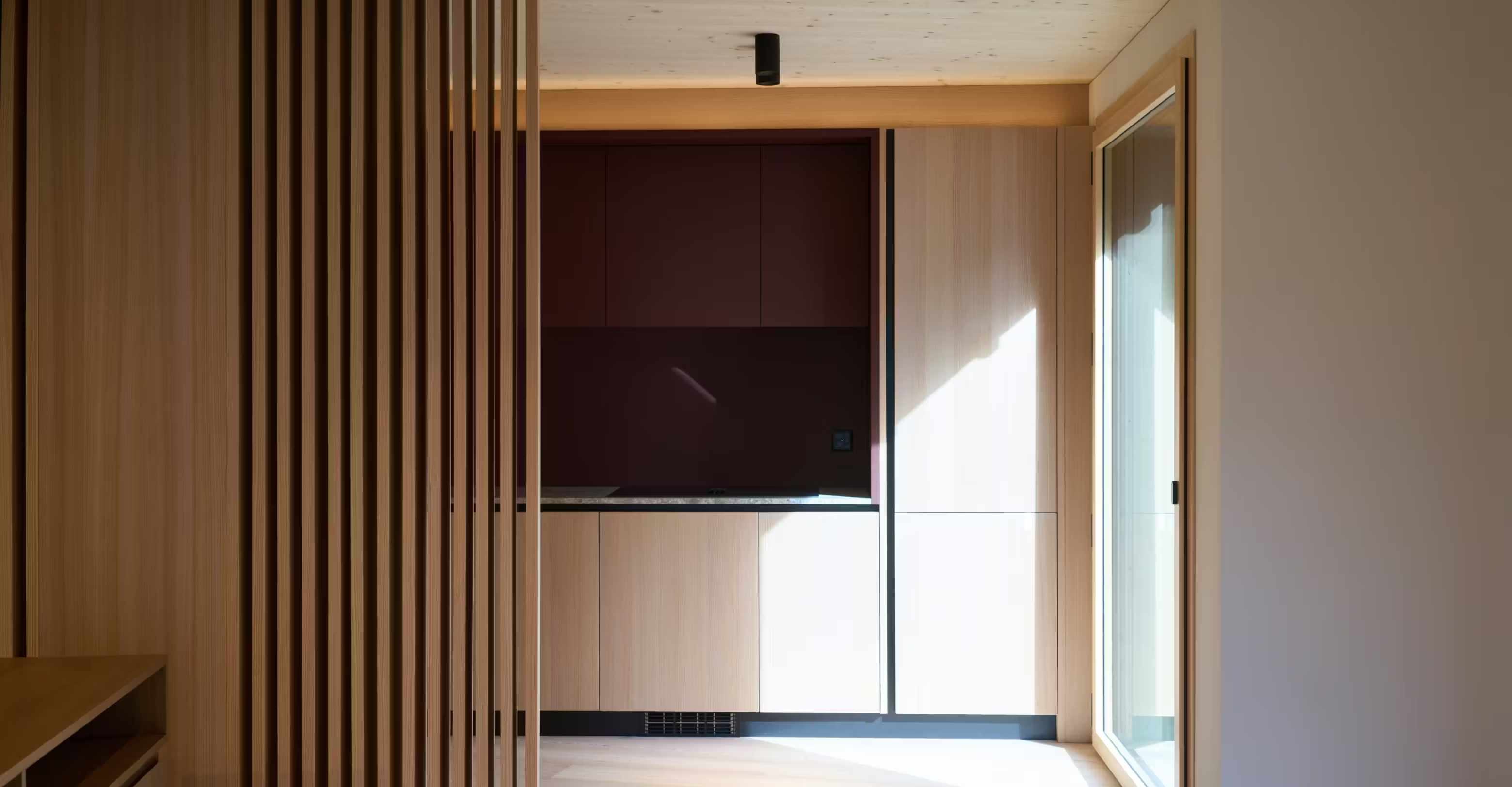
Practical measures that reduce running costs year after year
Passive strategies come first because they never break down. Deep reveals shade summer sun while admitting winter light. Thermal mass placed where the sun reaches it evens out temperature swings. Cross-ventilation removes the need for cooling on all but the hottest days. After that, mechanical ventilation with heat recovery keeps air fresh without throwing warmth away, and a modest heat pump handles what remains. Solar generation is added last, once demand has already been reduced, because oversizing panels to feed an inefficient building is an expensive way to solve the wrong problem.
Greener buildings through better everyday decisions
Sustainability is rarely one dramatic gesture. It is a series of ordinary choices about orientation, insulation, materials and detailing that compound quietly across a building's life.
What often goes wrong :
- Maximize natural daylight and ventilation
- Select durable, sustainable building materials
- Design flexible spaces for evolving lifestyles
- Improve ehnergy efficiency through passive strategies
- Blend architecture with the surrounding landscape
- Prioritize comfort, function, and lasting quality