
Innovative planning creates exceptional environments
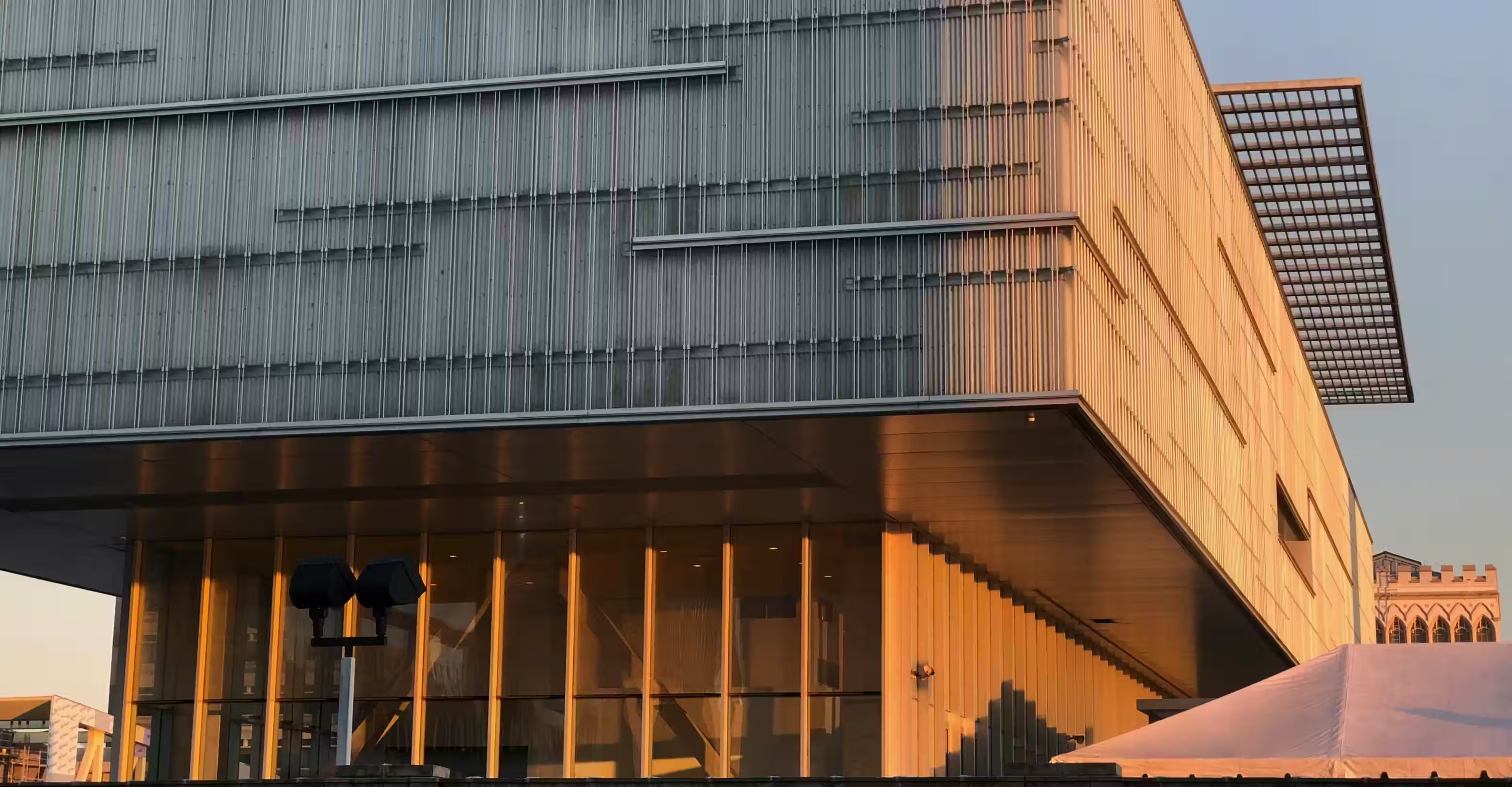

Nwosu works on mixed-use and community projects, where the arrangement of routes, thresholds and shared space usually matters more than the appearance of any single building.
How a plan decides the way people behave
Long before anyone notices a facade, they have already been shaped by the plan. Where the entrance sits, how wide a corridor runs, whether a stair invites you up or hides in a corner: these decide how a building is used far more than any surface treatment. Most complaints about a finished building trace back to a decision made at this stage.
We test plans by walking them on paper. Arriving with shopping, leaving in a hurry, moving a wheelchair through a doorway, carrying something awkward upstairs. If a layout only works for an unencumbered adult in no particular rush, it is not finished yet. Running through these ordinary scenarios early is far cheaper than discovering them after the building is occupied.
Planning moves that consistently improve a scheme
A few decisions repay themselves everywhere. Putting the entrance where people naturally approach saves years of desire lines worn across a lawn. Giving circulation daylight turns a corridor from dead space into somewhere people pause. Grouping services vertically keeps runs short and maintenance simple. Leaving one room slightly larger than its brief demands gives the building somewhere to absorb change later. And placing storage on the route people already take means it actually gets used rather than becoming the room where everything is abandoned.


Environments shaped by considered planning
Exceptional spaces rarely announce themselves. They simply work, because the sequence of arrival, movement and rest was resolved before anything was styled.
What often goes wrong :
- Placing entrances for symmetry, not approach.
- Leaving circulation without any daylight.
- Scattering services across the plan.
- Sizing every room exactly to brief.
- Testing layouts only for unhindered adults.
- Positioning storage away from daily routes.